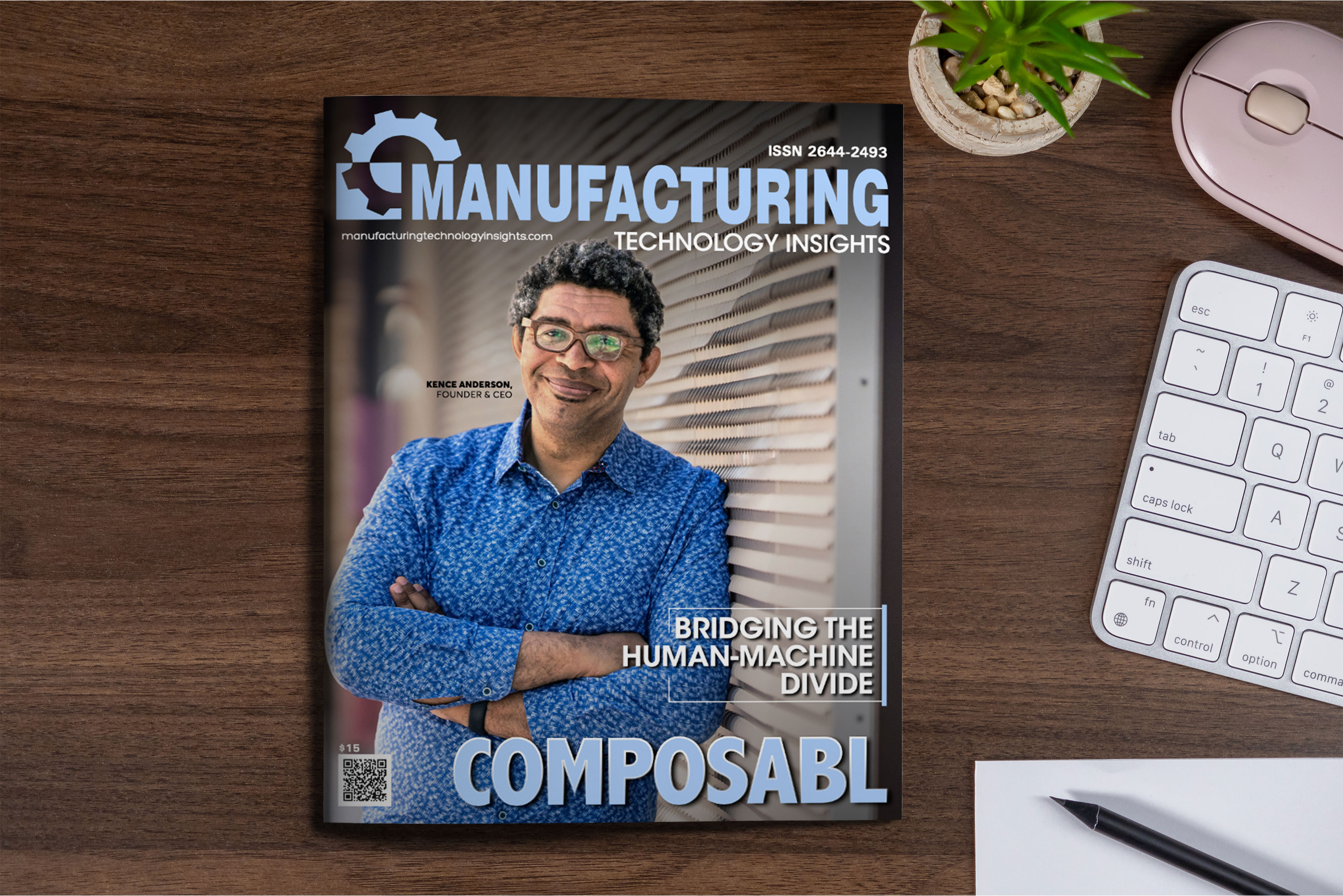
Transforming Industrial Automation with AI-Driven Agents
AMESA is pioneering the next generation of industrial automation by integrating AI with human expertise. Traditional automation struggles to replicate human decision-making, a gap that is widening as experienced workers retire and fewer young professionals enter the manufacturing sector. AMESA’s platform addresses this challenge by enabling engineers to design and deploy autonomous AI agents that simulate human intelligence for real-world industrial tasks.
Next-Generation AI for Manufacturing
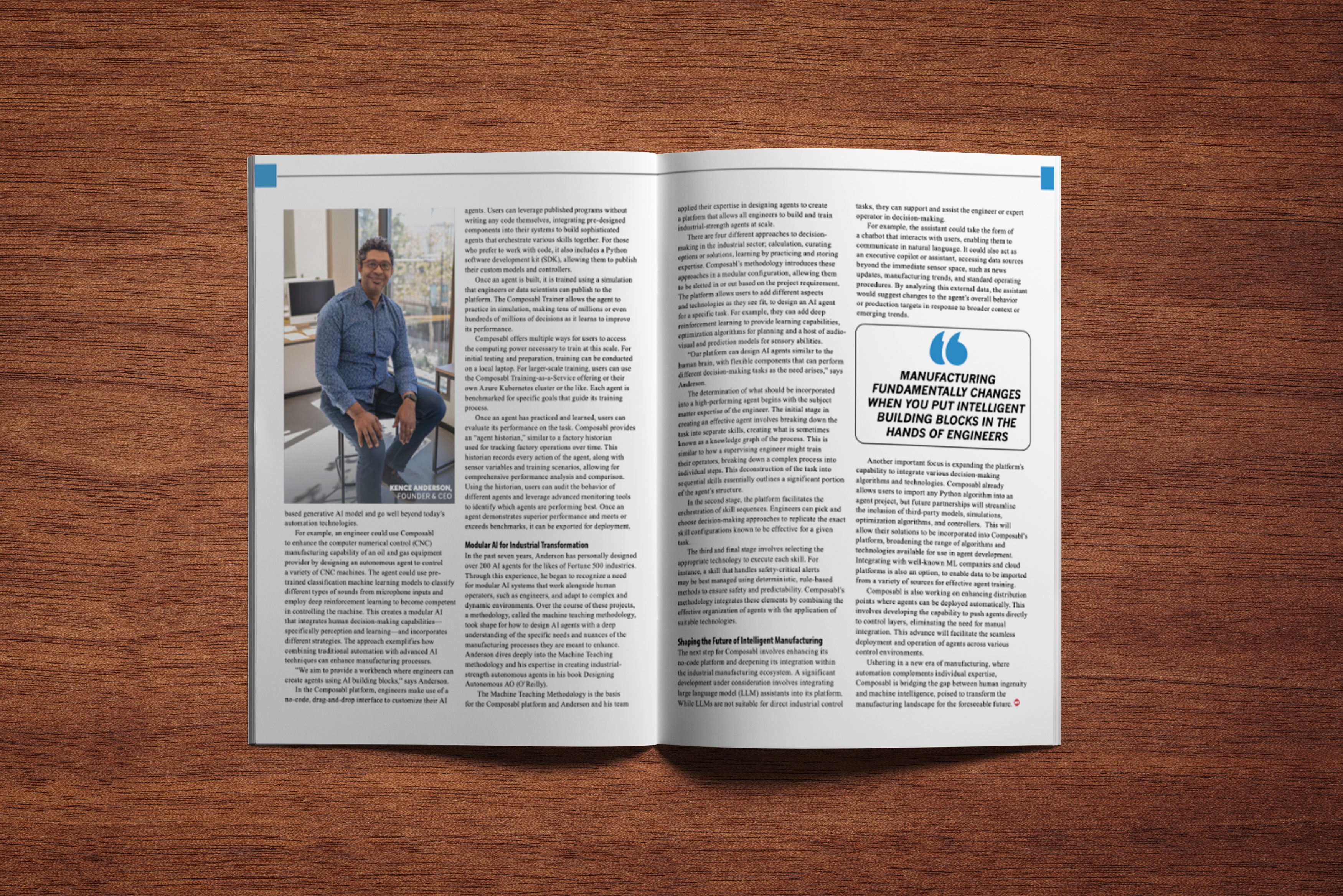
The AMESA platform provides engineers with a no-code, drag-and-drop interface and a Python SDK for advanced customization. AI agents built within the platform can perform perception, learning, strategic planning, and decision-making. For example, an autonomous agent can enhance CNC machine operations by classifying sound inputs and employing deep reinforcement learning to optimize performance.
Agents undergo extensive training in simulations before deployment, with a built-in historian tracking every decision to ensure transparency and performance benchmarking. Engineers can use AMESA’s Training-as-a-Service or their own cloud infrastructure to scale agent training.
“Manufacturing fundamentally changes when you put intelligent building blocks in the hands of engineers.” – Kence Anderson
Modular AI and Machine Teaching
Founder & CEO Kence Anderson has designed over 200 AI agents for Fortune 500 companies, refining a methodology called Machine Teaching—a structured approach to building AI agents that integrate seamlessly with manufacturing workflows. AMESA’s modular architecture allows engineers to tailor AI decision-making processes, combining techniques like reinforcement learning, optimization algorithms, and predictive modeling.
“Our platform can design AI agents similar to the human brain, with flexible components that can perform different decision-making tasks as the need arises.” - Kence Anderson
The platform follows a three-step methodology:
Decomposing Tasks – Engineers break down processes into discrete skills.
Orchestrating Decision-Making – Selecting optimal strategies for each skill.
Deploying the Right Technology – Integrating AI models, deterministic rules, or hybrid approaches for execution.
Expanding the AI Ecosystem
AMESA is enhancing its platform by integrating LLM-powered assistants to aid engineers in decision-making and incorporating third-party AI models and cloud-based optimization tools. Future advancements will enable seamless agent deployment across industrial control systems, eliminating manual integration.
By bridging the gap between human expertise and machine intelligence, AMESA is redefining manufacturing automation, making it more adaptable, intelligent, and efficient.

Press
AMESA Partners with Viridien to Accelerate and Scale Enterprise AI Autonomy
Viridien's high-performance computing infrastructure will power AMESA Agent Cloud, accelerating AI agent training and simplifying enterprise deployment

Press
AMESA Appoints Industrial Technology Veteran Alistair Fulton CEO to Lead Next Phase of Growth
Founder Kence Anderson transitions to CTO and Chief Product Officer as AMESA scales its industrial AI platform and Data to Autonomy methodology

Press
AMESA Launches AutonomyStack to Bring Trusted AI Autonomy to Critical Industrial Operations and Supply Chains
New enterprise platform combines operational data, human expertise and simulation to identify, build, validate and deploy autonomous AI across complex industrial environments

Article
What a Quarterback and a Process Operator Can Teach Us About AI Autonomy
A quarterback and a process operator may work in very different environments, but both rely on the same basic structure of expert decision-making: scenarios, strategies, and skills.